
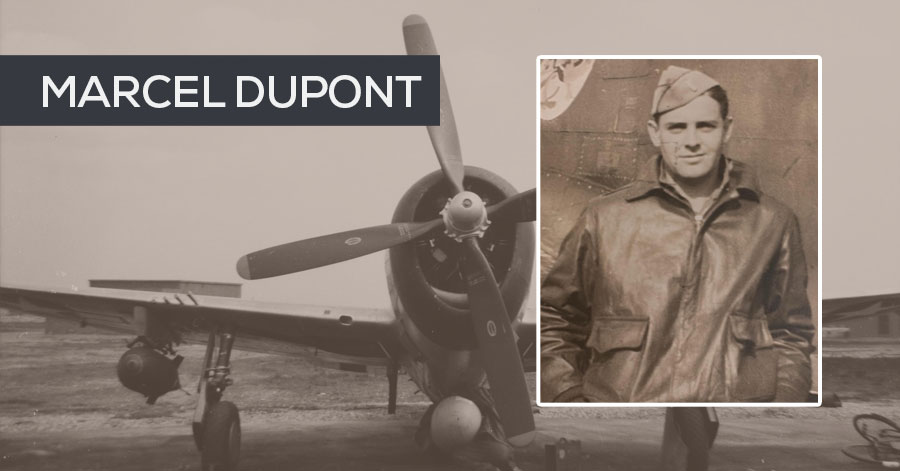
On 25 June 1944, 2nd Lieutenant Marcel Dupont of the 365th Fighter Group, aka the “Hell Hawks”, was shot down and killed over France after leaving RAF Beaulieu Airfield earlier that morning. The following article describes the day Marcel Dupont was lost in action on that mission, and you can read in-depth research by student Andy Joubert from New Hampshire, USA with his tutor Mallory Langkau-Gross. Their research was to participate in a project with the Albert H. Small Normandy Institute.
25 June 1944
25 June 1944 was one of the most successful days of for the USAAF 365th Fighter Group during their time flying out of Beaulieu Airfield in the New Forest, Hampshire, England. That day they managed to destroy thirteen enemy aircraft in the air, four more on the ground, and wreaked havoc on German transport and armour. But their achievements came at a cost – the loss of Second Lieutenant Marcel Dupont.
The day began at 0907 when sixteen aircraft of the 386th Fighter Squadron lifted off for an armed reconnaissance mission in the Chartres-Dreux area. Led by Major William D. Ritchie, they attacked the marshalling yard at Verneuil-sur-Avre, scoring direct hits on tracks, sidings, and repair shops.
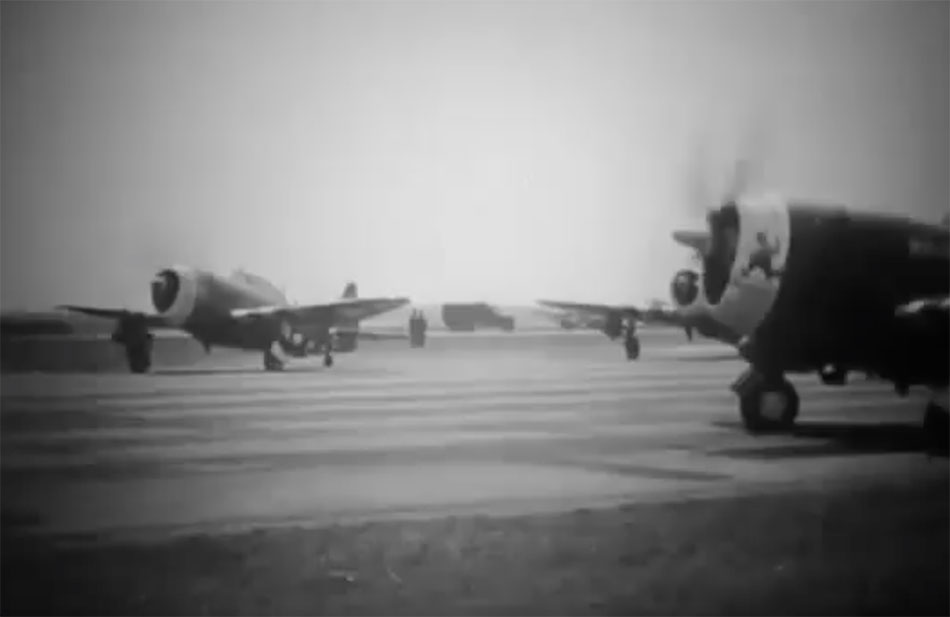
As the squadron re-formed after the bombing run, they encountered fifteen Messerschmitt Bf 109s. A fierce dogfight erupted, with multiple American pilots claiming kills. Among the chaos, wingmen split from leaders, ammunition ran low, and the fight broke into scattered engagements across the skies and down to treetop level.
During these running battles, several Hell Hawks downed enemy fighters. Major Ritchie, Captain George Porter, and others scored kills in high-speed chases that dropped from altitude to the deck. Lt. Melvin Carlson and Lt. Lloyd Hutchins claimed successes after pressing attacks at low level. Elsewhere, Green Flight leader Lt. Valmore Beaudrault and his wingman Lt. John Cave each forced enemy pilots to bail out.
It was in this confused and dangerous environment that Second Lieutenant Marcel Dupont became separated from his squadron. No record exists of him engaging an enemy directly during the fight. As the surviving pilots began to re-form, Dupont reported over the radio that he was all right, but he was no longer in sight. That was the last anyone heard from him. Whether he was shot down by enemy aircraft, struck by ground fire, or forced to crash-land remains unknown.
The battle moved on without him. Elsewhere that day, other squadrons of the group carried out further missions, bombing rail yards, attacking road convoys, and strafing enemy armour. Major Donald Hillman of the 387th Squadron fought off multiple Bf 109s, downing two. The afternoon saw the 388th and 386thSquadrons destroying more trucks, tanks, and even aircraft on the ground. By day’s end, the Hell Hawks had inflicted significant damage on German forces across a wide swathe of territory.
When the tally was made, 25 June 1944 stood as one of the group’s most productive days: thirteen enemy aircraft destroyed in the air, one probably destroyed, seven damaged; four destroyed on the ground; and over thirty vehicles knocked out. But for the men of the 386th Squadron of the 365th Fighter Group, the exhilaration of victory was tempered by the loss of one of their own.
Lt. Marcel Dupont’s disappearance left a sombre shadow over the achievements.
Marcel Dupont’s story as researched by Andy Joubert & Mallory Langkau-Gross
Second Lieutenant Marcel Dupont was a United States Army pilot during World War II. Most notably, he served during the Normandy Campaign as part of the 386th Squadron of the 365th Fighter Group. Dupont went missing in action on June 25, 1944, after an armed reconnaissance mission in France. Tragically, his family was notified the following May that Dupont had been killed in action. Dupont was single with no children at the time of his death.
Yet, his legacy lives on.
The Dupont family meticulously gathered and saved a collection of official documents, photographs, letters, and artefacts, allowing us to build an understanding of Marcel’s story.
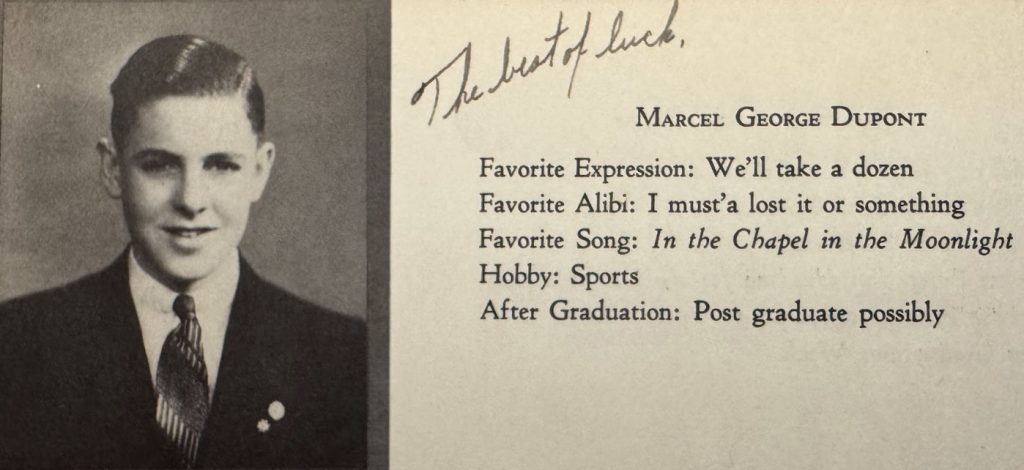
Marcel was born on October 6, 1920, in Concord, New Hampshire, to Marie and George Dupont. He had two brothers, Robert (Bob) and Paul. Marcel graduated from the Sacred Heart School in 1933 and Concord High School in 1937. His senior yearbook offers a glimpse into his personality, complemented by his senior photo.
His father’s service likely sparked Marcel Dupont’s military journey. George Dupont served in World War I, beginning in the New Hampshire National Guard on June 3, 1917. He was called for duty on July 25, 1917. He was gassed twice during his service and received the Purple Heart.
His oldest son, Marcel, eased into the military world when he participated in the Citizens’ Military Training Camp at Fort McKinley in Maine after graduating from high school. There, he learned many of the skills necessary for official military service. On March 25, 1941, Marcel enlisted in the United States Air Corps in Manchester, New Hampshire. He was 20 years and 5 months old at the time of his enlistment. Dupont had been employed as a railroad brakeman at Boston and Maine Railroad before his enlistment, although his enlistment record identifies his occupation as “Student” and states he had no prior service experience. The record also states that he had blue eyes, brown hair, a fair complexion, and stood five feet and eight and a half inches tall.
It is evident from Dupont’s flight log that he was a talented pilot. A great deal of work and dedication went into his achievements as a pilot. Dupont began his training in Scott Field, Illinois, where he attended Air Corps Technical School. Marcel completed this step of his journey on January 8, 1942, when he was reported to have received high ratings in his Algebra work.
The very next month, Marcel was appointed Corporal at Cochran Field in Macon, Georgia. The newspaper article reporting this news stated, “At present, [Corporal Dupont] is working as a clerk in the Message Center at Cochran Field Headquarters but has aspirations for greater things to come.” Indeed, he had great aspirations, and he was incredibly driven. Marcel spent the summer of 1942 learning how to fly planes. According to Dupont’s flight log, his “Beginning Primary – First Flight” took place on July 13, 1942, in Antigo, Wisconsin. He flew a Piper Cub O-80 L4A aircraft for his primary training, which he completed on August 26, 1942. It is remarkable how quickly pilots were trained during this time. For example, Dupont’s “First Solo Flight” was recorded in his flight log on July 29, 1942, just sixteen days after his first recorded flight.
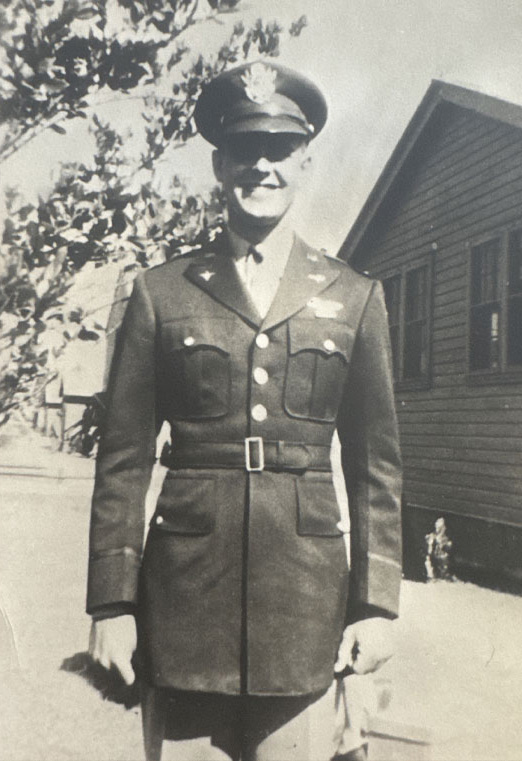
After his time in Wisconsin, Marcel learned to fly gliders in South Carolina. These lightweight, engineless aircraft were used to transport troops and heavy equipment undetected behind enemy lines. He shared more about this experience in a letter he wrote to his uncle and aunt, Mr. and Mrs. Edgar Dupont, which was postmarked on October 3, 1942. In this letter, he wrote,
“Now a little about my present work. To date I find myself without the least sorrow for having enrolled into the glider program. There were times when I surely thought I had mistaken in choice. However, that was due solely to a few trying days when everything seems to go wrong. Everyone experiences the same.”
In this same letter, he also explained that gliders are not easy to master, but he expressed optimism that with more experience, he would become proficient. He also shared that they were being trained “in the art of piloting them [the gliders] during the night.” While he enjoyed this experience, Marcel lamented the lack of sleep during this training.
Interestingly, Dupont’s flight log indicates a gap from August 26, 1942, in Wisconsin until November 8, 1942, when he logged an entry in Arkansas. However, almost two years later, Dupont added an entry between April 25 and April 26 of 1944 to clarify his previous omission. He entered,
“Previous time not herein entered flown in three place Aeronca and Cub Gliders (TG’5 + TG’8) at AAF Trg St., Greenville, S.C. from September 1942 to October 1942 – certified as correct on personal AAF Form #5 – not previously included in this log book.”
This entry also states that these flights included “acrobatics, x countries day + night, spot landings, etc.”
After learning to fly gliders, Marcel spent a few months in Stuttgart, Arkansas. From November 1942 until April 1943, Marcel recorded learning such skills as “Pattern + Landings, Altitude manoeuvres, and Man. Wheel Landings.” From May to June 1943, Marcel was in Orangeburg, South Carolina, where he seemed to focus on successful landings. By his final entry from this location on June 26, 1943, he had recorded 202 successful landings. His physical examination for flying was conducted on September 9, 1943. Dupont was twenty-two years old and had accumulated 135.39 hours of flying time. His vision, hearing, and overall health made him a suitable fit for service as a pilot. In the report, Dupont “denie[d] fear of flying.” Marcel spent the fall months of 1943 in Georgia and Florida, where he continued to develop his skills as a pilot. His entries included night flights, cross-country flights, acrobatics, and various formations. His last flight in the United States was logged on February 24, 1944. He was stationed in England starting in March 1944.
Dupont was assigned to the 365th Fighter Group of the U.S. Army Air Forces as a P-47 Thunderbolt pilot. The 365th Fighter Group, nicknamed the “Hell Hawks,” was primarily engaged in operations in Western Europe, including the D-Day landings and subsequent missions. The group consisted of three fighter squadrons: the 386th, 387th, and 388th. Marcel Dupont flew with the 386th Squadron. The Hell Hawks were widely renowned in the U.S. Army Air Corps. They were instrumental in determining the max payload for the P-47s. Two 1,000lb bombs and an external fuel tank were carried on the belly rack. In terms of firepower, the planes were equipped with eight separate light-barrel Browning M2.50 caliber machine guns, plus rockets and napalm. This became the standard after the Normandy invasion. The Hell Hawks utilized these armaments to carry out strikes on a wide range of targets, such as bridges, airdromes, rail facilities, gun positions, locomotives, and V-weapon sites.
On June 6, 1944, D-Day, the 365th squadron’s missions involved attacking gun emplacements and other targets, such as supply trains and bridges.
During Dupont’s service, the Hell Hawks flew out of three separate bases and many more standalone airstrips. After his death, the group went on to fly out of eleven total bases, more than any other unit in the 9th Air Force. They were the first to fly combat missions into German airspace and fly missions from German soil, as they played an important role in liberating Europe. The 365th flew in direct support of General Hodges’ Army to protect ground forces and destroy anything blocking the path of the infantry. The pilots of the 365th preferred the P-47 Thunderbolt over other aircraft. They thought that other planes may have been ‘pretty looking,’ but they believed the P-47 to be superior. Gordon Briggs, who also served in the 386th Fighter Squadron, recalled,
“If we weren’t on a mission we could listen to the loudspeaker. One day, we heard a lot of frantic transmissions coming in from one of the boys who took a direct hit from a 40mm shell in the right side of his engine. It was burning and he lost some power, but he managed to get back to the field. We watched him coming straight in trailing smoke. He made a good landing and stopped the plane just as soon as he could. When he did stop, he jumped out of the cockpit and hit the ground running to get away from the plane. They put the fire out and towed it over to our area. There was a big gaping hole in the side of the engine, and you could see the cylinders mangled and that all the oil had leaked out. That’s how tough the Pratt & Whitney R-2800 engine was.”
Dupont spent a lot of time in his P-47 Thunderbolt. During his service, he flew a total of 34 combat missions. These missions were all from Station #408 (RAF Beaulieu), England, as recorded in his flight log.
On April 22, 1944, his first combat mission, Dupont and his squadron dive-bombed enemy railroad yards. The mission lasted a total of two hours and thirty minutes, and it was flown during daylight hours. Over the next few months, he continued to dive bomb a variety of targets. Dupont also escorted bomber planes to their targets, one of the strategies the Allies employed during bombing runs. This straightforward strategy involved escorting bombers, delivering the payload, and then returning to base. However, most of Dupont’s combat missions involved some type of dive bombing. On Dupont’s third combat mission, he flew what was known as a ‘ramrod.’ This term is used to describe a short-range, intense bomber attack on ground targets. These attacks aimed to disrupt German infrastructure and troop movement.
On May 2, 1944, Dupont noted that he flew two missions that day. One was a dive-bomb on an airdrome, and the second was aborted before completion.
On June 6th, the launch of Operation Overlord, Dupont flew his second mission to Rouen to dive-bomb a bridge after escorting B-26s there a few days prior. Dupont’s flight log entry for that day indicates that he flew a Republic P-47 with a “P&W,” or Pratt & Whitney, 2000 horsepower engine. The last mission recorded in his flight log was not his last flown.
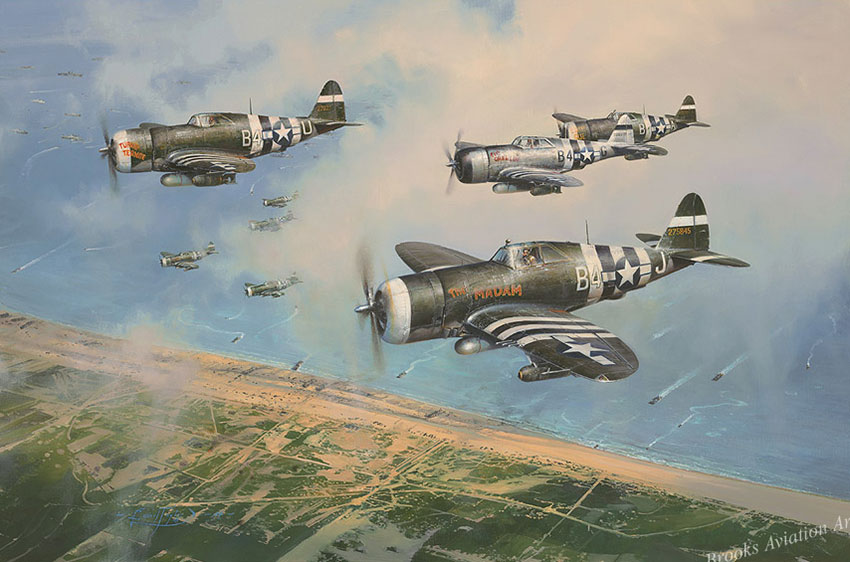
On June 25, 1944, Dupont never returned to record his final mission.
The last mission recorded was on June 23, 1944, noted as “Dive Bomb Marshalling Yards.”
Marcel Dupont gave his life for his country. However, it took almost a year after his death for his family to learn that he had been killed in action. On August 5, 1944, Marcel’s father, George Dupont, received a letter from E.A. Bradunas in the Notification Division at the Army Air Forces Headquarters. The letter stated that Second Lieutenant Marcel Dupont “was reported by the Adjunct General as missing in action over France since June 25th.” At the time of this letter, it was reported that Lieutenant Dupont was piloting a P-47 Thunderbolt fighter plane on June 25th for a reconnaissance mission to Evreux, France. During the mission, the planes “encountered enemy aircraft and during the ensuing engagement the formation separated. A radio contact was made with Lieutenant Dupont at which time he stated that he was all right and headed for home; however, he did not give his location and was neither seen nor contacted again.” He was a solo pilot for this mission, as the letter indicated; there were no others in the plane. The letter closes by assuring George Dupont that a search will continue to find his son and that he will be updated with any additional information.
Flight reports from the day of Dupont’s death also provide insights. Air Corps Captain George Porter provided a witness statement in his flight report. In his statement, he shared,
“I was leading a flight on an armed reconnaissance mission on 25 June 1944. Lt DUPONT was number four man in the flight. The flight split up during an engagement with several enemy aircraft at about 10.20 near Evreux. I did not see Lt D[U]PONT after the scrap started, but after the action was over, he reported over the R/T that he was OK and heading home. He gave no location and was not seen again. Several pilots in the Squadron landed at site A-2 to refuel and repairs but he was not one of them. He may have landed at some other strip and just be unable to get news to the Squadron.”
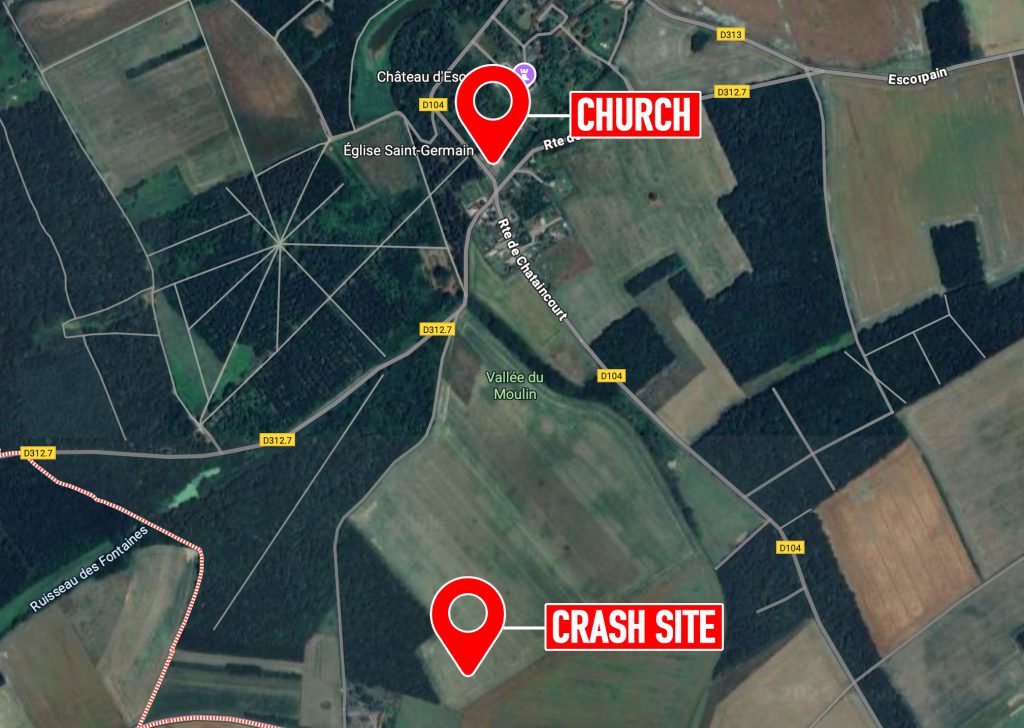
For some time, there was hope that Dupont might be found alive. While his family and members of his squadron wondered about his whereabouts, residents of a small French village witnessed his plane crash. Escorpain, France, is located about 72 km (~45 miles) west of Paris. In 1944, this village would have likely had fewer than 200 residents. When Dupont’s plane crashed in a field in this small village, it captured the attention of the residents. There were several witnesses. Two brothers, Gilbert and Jean-Claude Tremblay, who were twenty-one and ten years old at the time, saw Marcel’s plane crash.
They reported that they were so close to the plane crash that they could see the pilot in the cockpit as the plane descended. According to their recollection, the pilot appeared to already be dead before crashing because he was slouched over. Robert Letourner, who was twenty years old, was on his way to church for the 10:30 AM mass when he saw Marcel’s plane descend over the tree line. He said the crash occurred at 10:25 AM. Another resident, Pierre Galopin, witnessed the crash and ran to the field, only to find that the scene had been quickly surrounded by German soldiers, who took what they wanted from the scene and then left.
Henri Barret, who was thirty years old in 1944, was the oldest son of Mayor Paul Barret. Henri and his father took a wagon to the crash site later that afternoon to retrieve the pilot’s body. They brought Marcel back to the building next to the mayor’s office, which was then a fire station. Henri reported that Marcel’s wrist identification and “Blessed Virgin Medal” on a chain around his neck indicated that he was Catholic. Mayor Paul Barret was responsible for giving Marcel a Catholic funeral the following day, on June 26th, although he was imprisoned by the Germans for doing so. Both the mayor and the priest who were responsible for facilitating a funeral for Dupont were confined to prison and interrogated by the Gestapo. They were held for two weeks and then fined heavily before being released.
A report from the aftermath of the plane crash states,
“The Mayor of Escorpain had an identification tag which was taken from the body. The body was burned to such an extent that there were no clothes or papers remaining. The information on the identification tag was copied by the Mayor on a piece of paper and then the tag was turned over by him to the German Army personnel in Dreaux, France.”
Any personal effects that may have been with Dupont were either destroyed in the plane crash or taken by German personnel, according to the investigation report. In March of 1945, two months before Dupont’s family was notified of his death, a Report of Investigation of Isolated Grave was conducted. This report concluded that Marcel Dupont, 2nd Lt., had been buried in a grave located at “Cemetery of Escorpain, Escorpain, Eure-et-Loir, France.” The grave was marked with a cross that was labelled, “Marcel Dupont, Avaiteur Canadian,” as he was initially assumed to be Canadian by those who buried him.
In 1945, when Dupont’s remains were being relocated, the Mayor of Escorpain provided a handwritten statement to verify details of the incident to U.S. Army personnel. The statement reads,
“I certify that the deceased flyer was disinterred from here, Escorpain, was that of Marcel Dupont 2nd Lt O-816753. This deceased had one identification tag. This tag was turned over to the German army personnel at Dreaux, France. There were no papers found with the deceased, as the plane crashed and burned. All clothing was burned from the deceased’s body. This identification was got by a paper on which I had copied the information from the tag. This paper was given to the American soldiers that disinterred the deceased.”
Report of Burial from March 28, 1945 shows that Dupont was reburied in the St. Andre Military Cemetery after being previously buried in the Cemetery of Escorpain. This report also includes verification that his cause of death was a plane crash on June 25, 1944. At this time, Dupont’s family still had not been notified of his death. The delay in sending an official death notification could have been due to several wartime factors, such as disrupted communication between the United States and Europe, as well as other logistical issues. However, George Dupont received several letters throughout the time his son was classified as “missing in action.” For example, on January 16, 1945, the War Department sent a letter to inform George that “no report of any change in his status has yet been received.” Every update must have been emotionally devastating for Marcel’s family, as they endured 11 months of uncertainty.
His status remained “missing in action” until May 15, 1945, when his father received a telegram almost a year after his son’s death. The telegram notified George Dupont that his son had been killed in action on June 25, 1944.
The War Department filed a Report of Death for Marcel Dupont on May 24, 1945. The report states that he was confirmed as killed in action once “evidence considered sufficient to establish the fact of death was received by the Secretary of War from a Commander in the European Area.” Dupont was buried in the St. Andre Military Cemetery until he was disinterred on July 23, 1948, and moved to his permanent resting place at the United States Military Cemetery in France.
The calibre with which Marcel performed his assignments won him the Air Medal with the 1st Silver Cluster and the 1st, 2nd, 3rd, and 4th Bronze Oak Leaf Clusters. These achievements mark a total of ten commendations for his valour and bravery in aerial combat. This level of work was not routine. He consistently flew dangerous combat missions with exceptional skill.
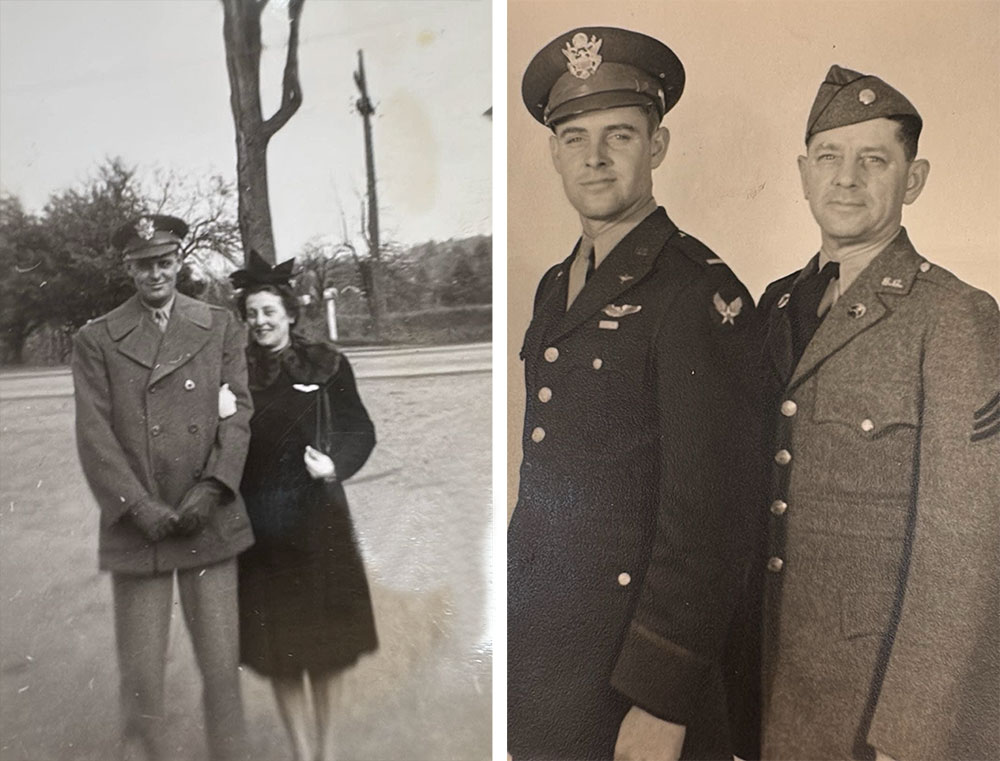
Marcel was survived by his parents and two younger brothers. While his family was deeply impacted by the loss, they carried Marcel’s memory on for decades to come. In 1951, his brother, Bob, submitted a request to the War Department to learn the location of his brother’s remains. At the time of his request, Bob was in the service and “attached to a U.S. Naval ship of the Atlantic fleet.” He wrote that there was a possibility he would be in Europe in the near future and hoped to learn the exact location of Marcel’s remains so that he may have “a chance of obtaining shore leave to visit the grave of [his] brother.” Bob received a response on October 31, 1951, indicating that Marcel had been permanently interred in Plot B, Row 23, Grave 39, in the United States Military Cemetery St. Laurent, France, at the request of his father, George.
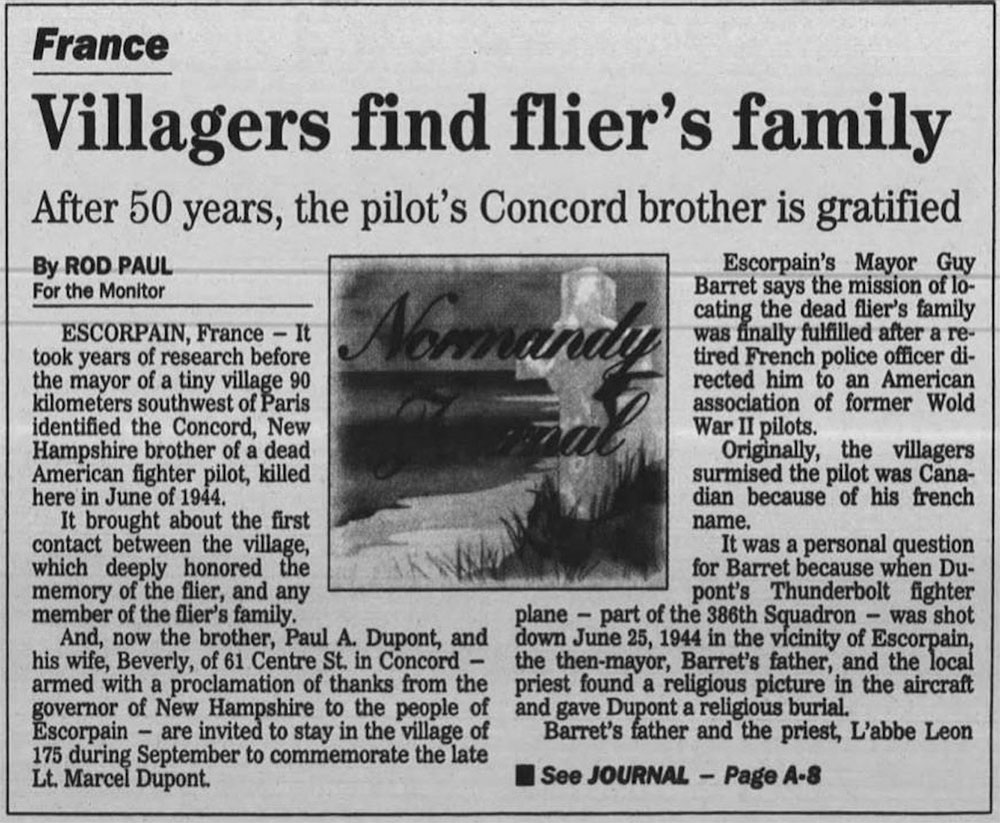
Marcel’s youngest brother, Paul, was only eleven years old when Marcel was declared missing in action, but he kept his brother in his heart and mind for the rest of his life. Paul sought and collected information to piece together his brother’s story. On August 4, 1994, 50 years after Marcel’s death, Congressman Swett submitted an official inquiry on Paul’s behalf to the Mortuary Affairs and Casualty Support Division. They provided Paul Dupont with a complete copy of Marcel’s personnel file, which included all the information the Department of the Army had pertaining to him. Paul continued to build a collection to preserve Marcel’s story.
Paul also connected with residents of Escorpain, France, some of whom witnessed Marcel’s plane crash and attended his funeral. On a trip to France in 1994, Paul and his wife, Beverly Dupont, had the incredible opportunity to explore a place of deep significance in Marcel’s story – the place of his death, where his plane crashed. Marcel’s sacrifice made a lasting impact on the Escorpain community, one that was still felt there. Paul carefully documented his trip in September 1994.
On September 17, 1994, Paul and Beverly attended a ceremony in Dreux, France, to honor Marcel with an Air Medal from the French Air Force. In his account of this ceremony, Paul stated,
“There were approximately thirty people present. We were introduced to Le Maire, Jean Hieux. The reception was held in their formal hall. Le Maire and Mrs. Vabois, Le Maire-Adjoint, presented us the Medal of the city of Dreux with inscription honoring Marcel. This was followed by Commander Govin’s address. An inspirational talk honoring Marcel as a fellow fighter pilot. He then presented us with the AIR MEDAL of the French Air Force also inscribed honoring Marcel as a Liberator of France. Dr. Vabois read letters from various dignitaries and gave us a copy of a book that was given to the G.I.s entering France during World War II. The press was present and we all had pictures taken of the presentation and a group picture on the steps of Le Mairie. Following the ceremony, we went to a quaint restaurant, ‘L’Escapade,’ with the Barrets, the Vabois and Commander Govin. Appetizers galore, excellent wine, foie gras and canard (duck), cheeses of Dreux with a peach pie for dessert. Great conversation, and hospitality.”
Commander Denis Govin, a highly decorated pilot from the Gulf War, was Wing Commander of the French Air Force Fighter Squadron at the time. Commander Govin had the honour of presenting the Air Medal to Paul. In his address, he stated…
“As a fighter pilot myself, I considered it a duty to pay homage to a comrade… When Marcel Dupont left for his last mission in June 1944, he knew the risks and paid the ultimate price. During the Gulf War, I myself was in a similar position, and I therefore probably know what your brother felt when he climbed into his plane before taking off. My experience of combat missions makes me think what Marcel Dupont did was not easy—far from it—and the tools he had were not as elaborate as those we use today. Not only did he have to fight the enemy in the air and on the ground, but he also had to fight the weather, and sometimes probably his own plane. No, it was not easy. So it is a privilege for me to honor his memory today. Fifty years ago, your brother Marcel came to France with a liberating spirit. My country was occupied and its people ruled by terror. Many young American men came and gave their lives for the freedom we enjoy today. Marcel Dupont did not return from his mission on June 25, 1944, and he now rests with many of his comrades in Normandy. That day, his mission was to attack the train lines from Evreux and help in the liberation of that town and in the general advance of the ground forces. Evreux was liberated less than two months later. You may be certain that not a drop of his blood was spilt in vain, for his fight helped make what France is today. To express our gratitude for the sacrifice, and our constant friendship with the American people, we would like you to accept this medal presented by the French Air Force with the wish that the memory of your brother and what he represented will be forever present in the hearts of all of us.”
The next day, on September 18, 1994, Paul and Beverly attended a dedication ceremony for a monument that honoured the war dead. In his written account of this day, Paul shared,
“We started our walk to the church following the same route that Marcel’s cortege had taken. Two school-age children were in the lead carrying flowers, followed by bearers of the French and American flags. This was a tranquil walk and certainly an odd sensation to pass by the castle where the Germans were stationed and where they first spotted the towns’ people walking along the wagon carrying Marcel’s body.”
The dedication was filled with emotion and such appreciation for the sacrifices made by their liberators. Paul wrote a detailed account of this ceremony in his travel journal:
“Church was filled with people, even the choir loft was filled… After the mass we all went out into the courtyard for the official dedication of the monument honoring the war dead. The monument is a beautiful granite piece where they have inscribed the names of the war dead or missing from Escorpain and then at the base they have inscribed a commemoration for Marcel… Pilote Americain, abattu a Escorpain Le 25 Juin 1944. The flags of France, Great Britain and the United States were flying over the monument and the base was surrounded by flowers… Microphone, members of the press and people from Escorpain and surrounding villages were all in attendance. Guy Barret spoke first, honoring the war dead of the village and delivering a heart-rendering eulogy for Marcel. Then it was my turn. I had Guy translate my speech to French and had practiced a few times under the expert guidance of Monique. I think that it went OK (at least that is what I was told). Both Beverly and I were on center stage… reporters with cameras, taking down every word… The musicians played the anthem of France and United States following the ceremony at the church… emotional. At the Mairie, we were presented with a Book of Normandy and D-Day and a priceless commemorative medal of D-Day. These were given to us from the Conseils and Le Maire on behalf of the people of Escorpain. Individuals gave us paintings, books and a plate depicting the Chapel at Dreux. A big surprise was the gift of parts of Marcel’s plane mounted on a board with an appropriate plaque. We, in turn, gave them the commendations from the Mayor, Governor and President. These are now on the wall of Le Mairie in Escorpain. I summed by saying in English, ‘That it is like reading a book with the final chapter missing. Today, you people have finally given to us the final chapter… now the book is finished… it was a good book.’ All this was followed by a well-planned meal at the cafe for everyone in attendance.”
After returning home, Paul shared his account of these experiences with other family members. In a reflection of the ceremonies honouring Marcel, Paul wrote,
These people went all out and showed their love, their thanks and their remembrance of their liberators. I must admit that the day was one of elation but much emotion. Emotion, as I only wish that mom and dad knew the final outcome of Mike’s destiny and could have been part of such a tribute. Maybe it would have eased the pain just a little.”
Paul, along with other members of the Dupont family, has also travelled to visit Marcel’s final resting place in the Normandy American Cemetery in Colleville-sur-Mer, France. Paul’s account of this experience was positive. He wrote,
“What a magnificent memorial. If it had to be, I am very pleased that my folks decided that he stay with his comrades and rest in peace in the truly serene surroundings.”

Marcel’s time in the air over France may have been brief, but the impact of his sacrifice remains. Marcel’s story serves as a reminder of the human cost of war, as well as the enduring power of remembrance. In a letter to George Dupont, Clovis Childers of the 365th Fighter Group spoke to the magnitude of Marcel’s impact. Childers wrote,
“I can fully understand your feelings at such a great loss, but I trust that you will find some solace in the fact that Marcel sacrificed his life so that others may enjoy it more plentifully.”
For the full references, please download the original research file by Andy and Mallory.


