
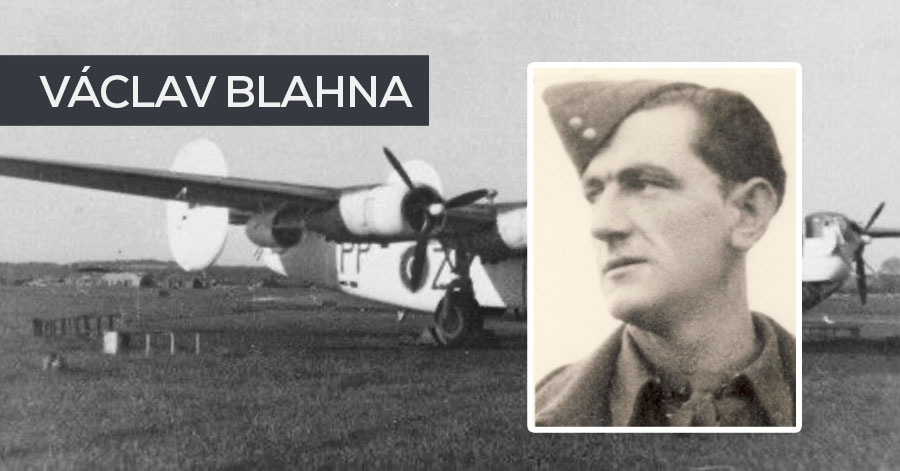
This article is in memory of Sergeant Václav Blahna, a Czechoslovak air gunner of No. 311 (Czechoslovak) Squadron RAF. In August 1943 he was serving at RAF Beaulieu, flying in Liberator GR Mk V BZ775 on anti-submarine duties for Coastal Command. In the early hours of 29 August, he was killed along with his crew when their aircraft crashed 30 seconds after take-off.
Early life in Blovice
Václav Blahna was born on 13 September 1915 in the small town of Blovice, south of Plzeň. He grew up in a working-class family and lived with his parents in the Hájek area of the town. After school he trained as a metal caster. Like many young men from Blovice he went to work at the Škoda works in Plzeň, one of the biggest industrial employers in pre-war Czechoslovakia.
However, flying had already caught his imagination. At Bory airfield on the edge of Plzeň he gained a sport pilot’s licence, learning to fly light aircraft in peacetime before he ever wore RAF blue.
He completed his compulsory military service in 1937–1938 with an infantry regiment at Chomutov, passing through NCO and machine-gun training. This experience would later prove useful when he became an air gunner.
Exile and the road to Britain
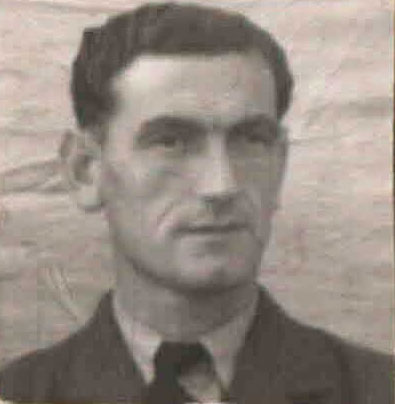
The Munich crisis and the subsequent German occupation of the Czech lands brought an end to the independent Czechoslovak state. Václav chose to not accept this.
On 12 August 1939 he crossed the border into Poland and joined the Czechoslovak forces forming there. From Poland he was sent by military transport to France in the autumn of 1939, where he served in the infantry and underwent further training.
After France fell in June 1940, he was evacuated across the Channel to Britain with other Czechoslovak soldiers. There he remained in the Czechoslovak infantry until August 1942, when, on his own request, he was transferred to the air force as aircrew.
By the time he set foot on an RAF station he had already escaped one occupied country, served in two others, and taken part in the retreat from France. His journey from Blovice to Beaulieu was already long and dangerous before he ever flew in a Liberator.
Training as an air gunner
Once accepted for aircrew, Václav was sent on a course for air gunners in the RAF training system. Czechoslovak sources record that he began his gunnery training late in 1942 and, after passing the course, was posted to 311 Squadron in June 1943. He joined the squadron with the RAF service number 788839 as a sergeant air gunner.
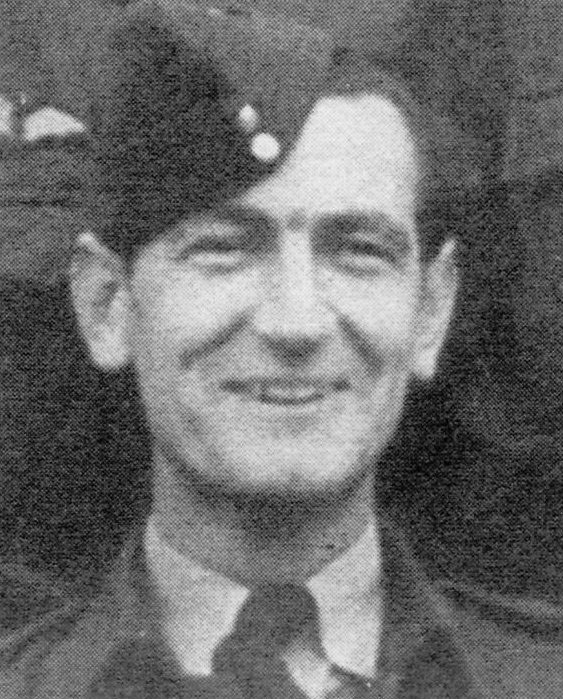
As an air gunner on a Liberator, Blahna’s duties included manning one of the defensive gun positions, scanning the sky and sea for enemy aircraft or U-boats, and supporting the wireless operators and other gunners in the crew. Coastal Command patrols could be monotonous when nothing was seen – and suddenly lethal when a shadow on the water turned out to be a surfaced submarine or an inbound enemy aircraft.
By this time, No. 311 (Czechoslovak) Squadron had already transferred from Bomber Command to Coastal Command and was flying Consolidated B-24 Liberator GR Mk Vs on anti-submarine and anti-shipping patrols over the Atlantic and the Bay of Biscay.
The squadron’s records indicate that by the end of August 1943 he had completed just two operational sorties before the final flight of BZ775, making the night of 28/29 August only his third operation.
Around July of 1943, he married an English woman, Jessie Farnsworth, creating a new family tie in Britain. I believe she was from Yorkshire. Now Jessie Blahna, once widowed, she would later re-marry in July 1945 to a man named William, in Wakefield, Yorkshire
RAF Beaulieu and Liberator BZ775
In early 1943, 311 Squadron began operating from RAF Beaulieu. Liberator GR Mk V BZ775, coded “G”, was delivered to 311 Squadron on 17 January 1943.
On the night of 28/29 August 1943, BZ775 took off from Beaulieu for another patrol over the Bay. The aircraft was heavily laden with fuel and depth charges for the sortie. At about 03:05, during the take-off run, it failed to gain adequate flying speed, struggled into the air, then struck trees beyond the end of the runway and crashed in Hawkhill Inclosure. The Liberator exploded and burned; all eight men on board were killed instantly. You can read the full report here.
Václav Blahna was 27 years old.
Burial at Brookwood Military Cemetary
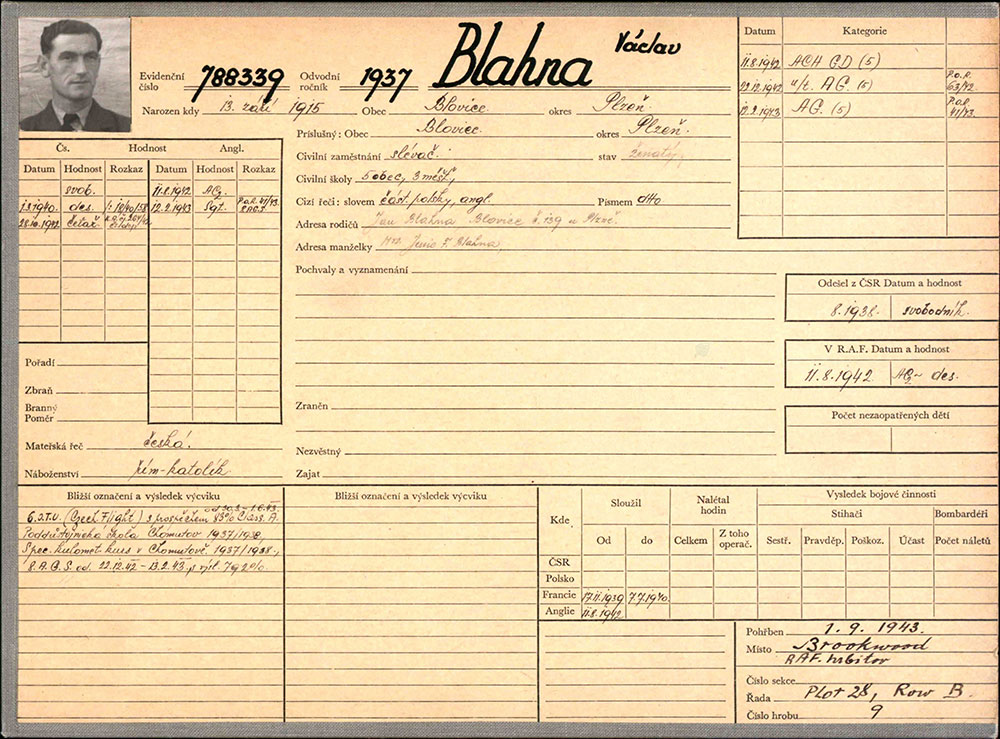
After the crash, the bodies of the crew were taken to Brookwood Military Cemetery in Surrey. There, in the Czechoslovak section, they were buried together in a single row. He is buried in plot 28, row B, grave 9.
Decorations and post-war recognition
During the war, Václav Blahna was awarded the Czechoslovak War Cross 1939 for his service. After the conflict, the restored Czechoslovak authorities continued to honour men like him. In 1991, as part of a wider rehabilitation of wartime airmen who had been sidelined or persecuted under the Communist regime, he was posthumously promoted to the rank of lieutenant colonel.
Remembered in Blovice
Blahna’s story is not only preserved in military archives and at Brookwood. In his home town of Blovice he is very much part of local memory.
The town’s official list of notable natives records him, noting that he lived with his parents at Hájek 139, worked as a metal caster, joined the foreign army in Poland in September 1939, and later became an air gunner with the Czechoslovak bomber squadron in Britain.
There is a memorial in Blovice dedicated to local RAF airmen Karel Bečvář, Václav Blahna and Miroslav Drnek.
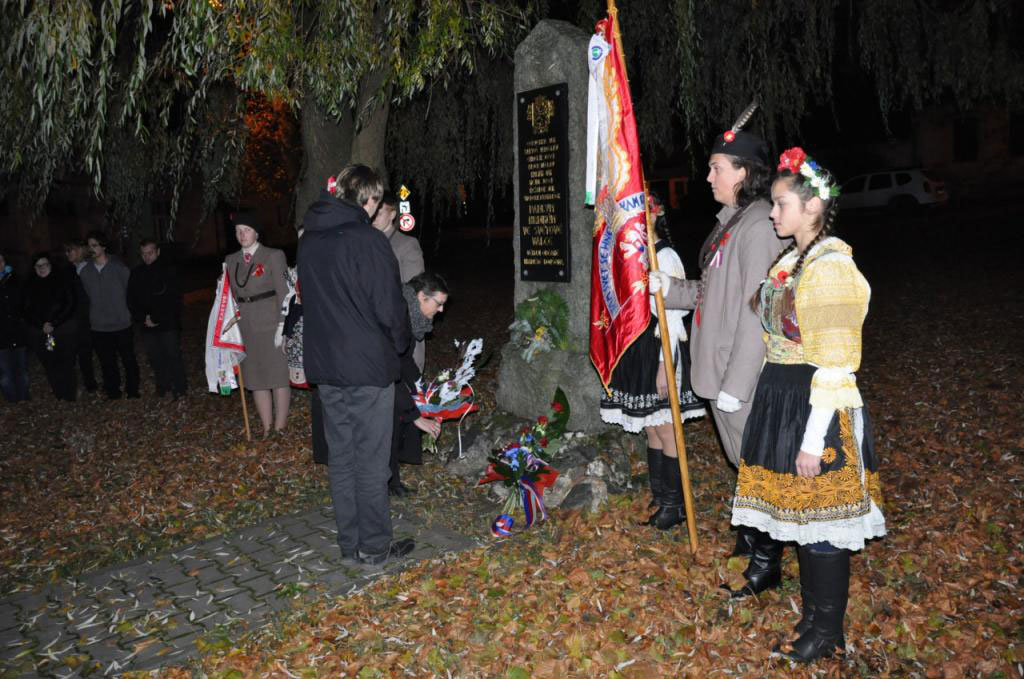
A street in the town has also been named after him.
Credits & references
- https://www.blovice-mesto.cz/seniori/mesto/rodaci-a-vyznamne-osobnosti-blovic-stare/vaclav-blahna
- https://www.vets.cz/vpm/vaclav-blahna-1100
- https://www.vuapraha.cz/cechoslovaci-v-zahranici/5648
- https://fcafa.com/2012/04/02/liberator-aircraft-of-311-sqn
- https://www.denik.cz/ze_sveta/311-ceskoslovenska-bombardovaci-perut-katastrofa-beaulieu.html
- https://www.vets.cz/vpm/33483-pametni-deska-vaclav-valenta
- https://www.muzeum-blovice.cz/fotogalerie/doprovodne-akce/archiv-2019/den-valecnych-veteranu-180cs.html


