

This article is in memory of Squadron Leader Geoffrey Berrington Warnes, a Yorkshire-born fighter pilot and commanding officer of No. 263 Squadron RAF. In early 1944 he led Hawker Typhoon operations from RAF Beaulieu over the Channel and the Cherbourg peninsula. On 22 February 1944 he was lost along with two of his pilots in the sea north-west of Guernsey while flying from Beaulieu via RAF Harrowbeer. His body was never recovered.
The reports on this website aim to keep alive the stories of the men and women who served at Beaulieu. Warnes is one of those men: an office worker turned rugby player, then a fighter-bomber leader and, unusually, possibly the first RAF pilot officially cleared to fly in combat wearing contact lenses.
Squadron Leader Geoffrey Berrington Warnes
His early life in Leeds
Geoffrey Berrington Warnes was born on 22 October 1914 in Leeds, the son of Clifford Norman and Dorothy Warnes. He grew up in Headingley, then a growing suburb to the north-west of the city.
He attended Cockburn High School and left in 1931 to start his working life in an office, following a fairly ordinary path for a young clerk in inter-war Yorkshire. But outside work he had more adventurous ambitions, being drawn to flying and to sport. He joined the Civil Air Guard and learned to fly with the Yorkshire Aeroplane Club at Yeadon Aerodrome (now Leeds Bradford Airport). His instructor there was a young ‘Ginger’ Lacey, who would later become one of the best-known fighter aces, and reportedly second-highest scoring RAF fighter pilot of the Battle of Britain.
From 1936 until the outbreak of war, Warnes also played rugby for Headingley Rugby Club (the forerunner of today’s Leeds Tykes). Teammates later remembered him as tough, energetic and cheerful, qualities that would be noticed again in wartime.
Determined to fly despite his eyesight
When war was declared in September of 1939, Warnes volunteered to serve as a pilot. The RAF, however, turned him down. He wore glasses and his eyesight was judged too poor to be safely corrected with lenses in flying goggles. Instead of being sent to flight training, he was accepted only for ground duties.
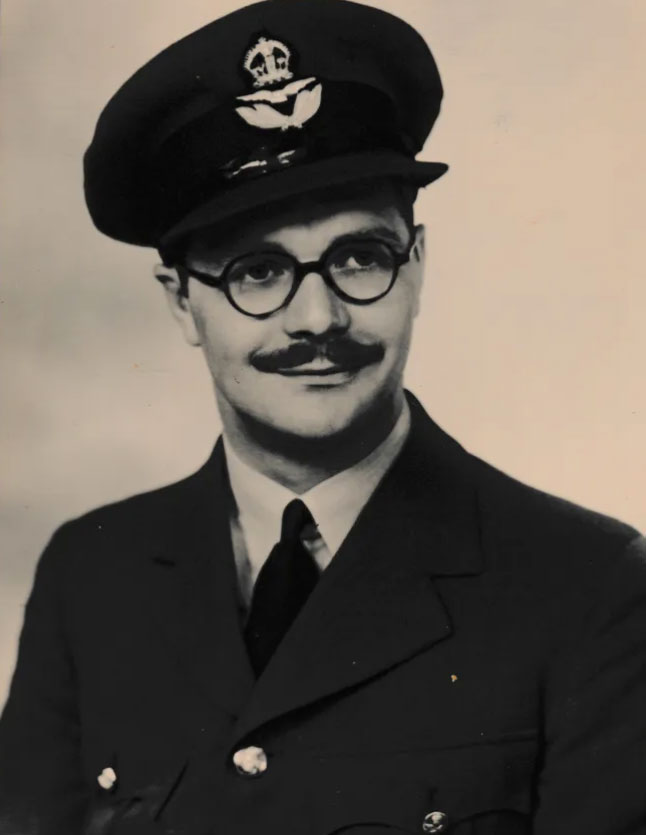
But, showing the tenacity that he would later display in battle, he did not give up. In April 1940 he was commissioned as an acting pilot officer on probation and posted to France. After the fall of France, he returned to Britain and was assigned to a barrage balloon unit – hardly the work he had hoped for, but still he kept pressing to fly.
In November 1940 he finally managed to transfer to the General Duties Branch for training as a flying instructor. Over the next months he accumulated around 400 hours teaching new RAF pilots on Tiger Moths, mastering the basics of flying hundreds of times over while still trying to reach a front-line fighter squadron.
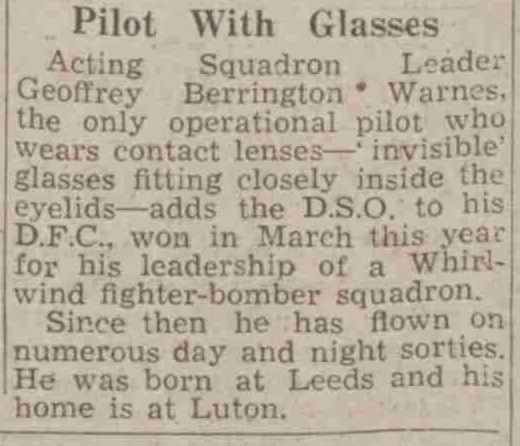
Even then his eyesight was a problem. He flew wearing spectacles under his goggles until a medical officer challenged the safety of this arrangement and warned that he might be grounded. Rather than accept that, Warnes sought specialist help. At his own expense – £50, a substantial sum at the time – he obtained a pair of early contact lenses and was referred to Group Captain Philip Livingston, a consultant ophthalmologist in the RAF Medical Services. Livingston examined him and gave written permission for Warnes to fly operationally while wearing contact lenses.
Because of this decision, Warnes is widely regarded as the first RAF pilot officially cleared to fly in combat with contact lenses, a small but unusual distinction.
Westland Whirlwinds – shipping strikes and leadership
Once cleared for combat duties, Warnes was posted to No. 263 Squadron RAF at Charmy Down in Somerset. The squadron flew the Westland Whirlwind, an advanced twin-engined heavy fighter with a powerful battery of four 20mm cannon. At the time, only 263 and the newly formed 137 Squadron flew the type.
Warnes’s first recorded mission, on 19 September 1941, was a ‘Mandolin’ operation – a low-level attack on Morlaix airfield in Brittany. Four Whirlwinds flew from Predannack in Cornwall but failed to locate the airfield in poor conditions and instead made an inconclusive attack on a pillbox. He later noted that their escorting Spitfires from 313 Squadron, did not always keep as close as the Whirlwind crews might have liked.

On 9 November 1941 Warnes was promoted to flight lieutenant and appointed commander of B Flight. The winter of 1941 into 1942 was relatively quiet, with fog, snow and routine patrols over the sea lanes. In February 1942 the squadron moved to Fairwood Common, near Swansea, and then in April to Angle in Pembrokeshire. From these airfields the Whirlwinds flew convoy protection and reconnaissance patrols, guarding coastal shipping against German aircraft and E-boats.
Later in 1942 the squadron shifted to a more offensive role. In August they moved to Colerne in Wiltshire and had bomb-racks fitted to eight Whirlwinds, transforming them into fighter-bombers. After a short period of bombing practice, 263 Squadron transferred to RAF Warmwell in Dorset. There, on 9 September 1942, Warnes led one of four aircraft on their first bombing operation, attacking four large armed trawlers off Cap de la Hague. Two of the ships were sunk, an early success in the squadron’s new role striking German coastal shipping.
Commanding 263 Squadron and new tactics
On 9 December 1942 Warnes became commanding officer of No. 263 Squadron and was promoted to squadron leader. His predecessor had been shot down off Jersey just two days earlier and was later presumed killed, so Warnes took over at a difficult, unsettled moment for the unit.
Under his command, 1943 was a far more active year than 1942. The Whirlwinds were used heavily for bombing and strafing attacks on shipping, railways and other targets in northern France, interspersed with the routine but still hazardous work of convoy cover and reconnaissance.
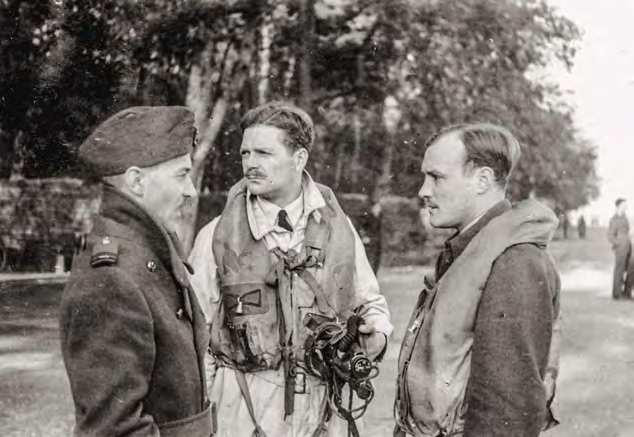
The squadron records later described Warnes as a strict disciplinarian with a forthright manner, but also as a leader who combined that toughness with personal kindness. He made his expectations completely clear and, crucially, never demanded anything of his pilots that he was not prepared to do himself.
He also proved to be an innovative tactician. Drawing on the Whirlwind’s speed, firepower and new bomb-carrying ability, Warnes developed methods of medium-level dive-bombing against shipping – a compromise between very low-level attacks, which were accurate but exposed to flak, and higher-level bombing, which was safer but less precise. His notes on these techniques were adopted as a Fighter Command tactical memorandum, and the squadron history suggests that he “may have some place in the history of the war” for this contribution alone.
For his leadership and success in operations he was awarded the Distinguished Flying Cross (DFC) in early 1943 and the Distinguished Service Order (DSO) in June. The DSO citation, notes his numerous sorties by day and night, including low-level attacks on heavily defended railway targets and successful strikes on enemy shipping, among them the night destruction of a medium-sized motor vessel in May 1943.
The DFC citation read:
“Squadron Leader Warnes and Flight Lieutenant Blackshaw have participated in a great number of sorties, achieving many successes. On one occasion these pilots attacked and sank an armed trawler, whilst on another sortie they delivered a destructive attack on a distillery. In low level raids on enemy airfields and other ground targets they have invariably pressed home their attacks with great determination. Squadron Leader Warnes, who wears contact lenses to correct his sight for flying, and Flight Lieutenant Blackshaw have displayed high qualtities of leadership and outstanding keenness.”
The DSO citation read:
“Since the award of the Distinguished Flying Cross this officer has been engaged on numerous operational sorties, both by day and night, which have included low level attacks on heavily defended railway targets and attacks on enemy shipping. One night in May, 1943, Squadron Leader Warnes participated in the destruction of a medium sized motor vessel. He has displayed considerable powers of leadership and his skill and enthusiasm have been an example to others.”
Two days after the award of the DSO he completed his tour of operations and was posted to No. 10 Group headquarters as deputy for operations – a natural staff role for an experienced squadron commander.
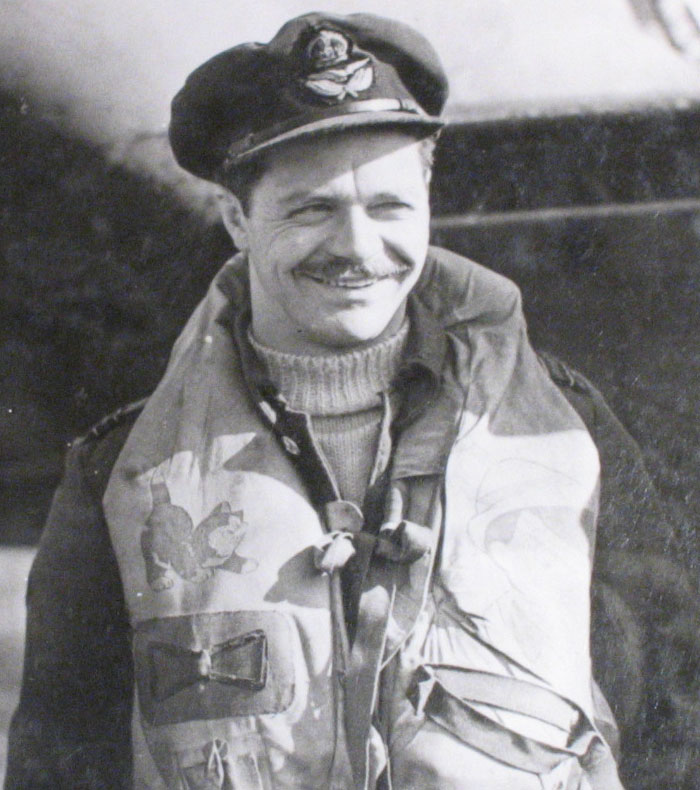
Back to the squadron and the Hawker Typhoon
The connection between Warnes and 263 Squadron did not end there. Late in 1943 the unit gave up its Whirlwinds and began to convert to the Hawker Typhoon, a powerful single-engined fighter-bomber designed for low-level ground attack. The last Whirlwind operation from RAF Warmwell took place on 29 November 1943; a few days later the first six Typhoons arrived, and Westland (the Whirlwind’s manufacturer) hosted a farewell party for the squadron in Yeovil.
On 5 December 1943 Warnes returned from staff duties to command his old squadron again. By then the unit had moved to RAF Ibsley in the New Forest, with the Typhoons flown in by another squadron. His immediate job was to work up tactics for this very different aircraft and prepare his pilots for a new phase of the air war over northern France.
The switch from the twin-engined Whirlwind to the Typhoon was not entirely comfortable. The Typhoon’s powerful Napier Sabre engine still had reliability problems in late 1943, and for pilots used to the reassurance of two engines, the idea of long crossings over the Channel in a single-engined machine that occasionally failed was not attractive. The squadron diary records this unease, noting that missions would take them 60 to 120 miles out over the sea with “only one, occasionally unreliable, engine”.
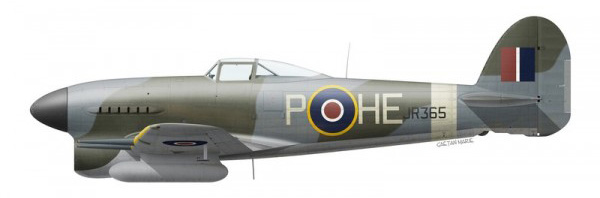
No. 263 Squadron RAF arrive at RAF Beaulieu
On 1 February 1944 263 Squadron became operational again, now based at RAF Beaulieu. From this New Forest airfield, Typhoon operations were directed mainly against the Cherbourg peninsula, including raids on shipping, coastal defences, railways and V-weapon launch sites.
In that same month Warnes showed that he was still very much a fighting squadron commander, not just an organiser. On 12 February he shot down a Dornier 217 bomber over Brittany. The following day he chased and destroyed a Messerschmitt Bf 109 near Chartres, adding to the squadron’s growing combat record as the build-up to D-Day gathered pace.
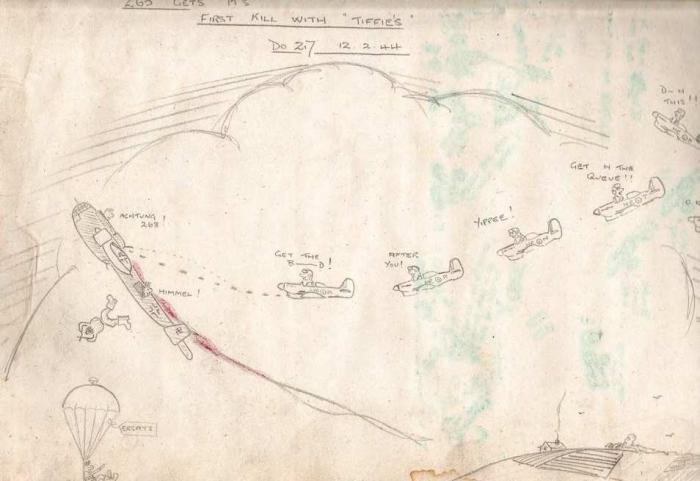
On 14 February many of the squadron’s pilots took part in dinghy drill at Bournemouth swimming baths, practising how to get into a small life-raft in the water. This training would prove grimly relevant only eight days later.
22 February 1944 – the final mission
The day of 22 February 1944 began as just another operational task for 263 Squadron. The original plan, coded Rodeo 88, was for a fighter sweep from Kerlin Bastard (a German airfield in France) to Vannes in Brittany, but bad weather forced a change of plan. Instead, nine Typhoons were tasked with a shipping reconnaissance off the Channel Islands.
By this point the squadron was operating from RAF Beaulieu, but for the mission they refuelled at RAF Harrowbeer in Devon before heading out over the sea. No enemy aircraft were encountered and no flak was reported. Yet the day would be recorded in the squadron diary as ‘disastrous’.
Off Guernsey, roughly eight to twenty miles north-west of the island depending on the source, Warnes’s Typhoon – a Mk Ib, serial MN249 – suffered engine trouble. Unable to make land, he ditched the aircraft in the sea. Other pilots saw him alive in the water, swimming towards what appeared to be an uninflated or only partially inflated dinghy.
Flying Officer Robert ‘Bob’ Tuff of the Royal Australian Air Force, flying Typhoon JR302, announced that he intended to bail out to help his commanding officer. Flight Lieutenant Gerald Racine, another pilot in the formation, urged him not to, but the warning was either not heard or ignored. Tuff left his aircraft and descended into the sea. He was never seen again.
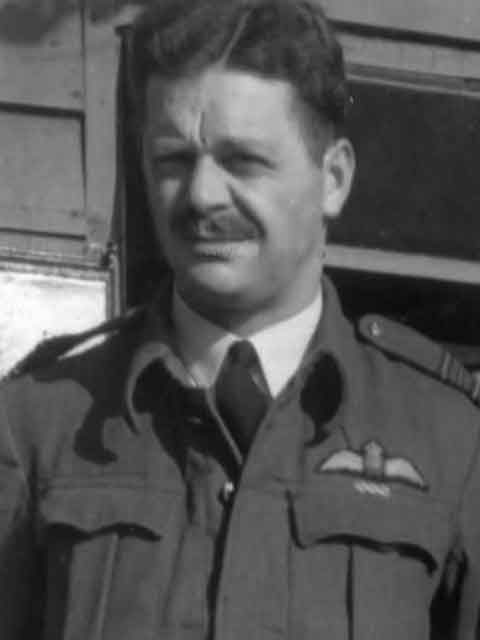
A third Typhoon, flown by Flying Officer Robert Hunter (JR304), was circling the area while the ditching and attempted rescue unfolded. At some point during the search, he also disappeared; no one witnessed exactly what happened. Like Warnes and Tuff, he did not return.
The operational records book for No. 263 Squadron RAF documents the day.
Nine a/c flew to Harrowbeer at first light. From there they took off for a sweep but, owing to cloud made a brief shipping recco, west of the Channel Islands. This operation proved disastrous to the Squadron. S/Ldr G.B. Warnes DSO DFC ditched his a/c (not due to e/action) and was seen swimming towards what looked like an uninflated dinghy. F/O. R.B. Tuff R.A.A.F. then said that he would bale out to help the C.O. F/Lt G.G. Racine told him not to do this, but it seems that he did bale out. F/O. R.C. Hunter was simply not seen or heard of after the C.O. went in. Extensive A/S/R searches, using every available resource, were laid on and continue, but nothing has been seen of these three officers who are missing in circumstances which give little hope. The weather was bitterly cold.
S/Ldr Warnes came to the Squadron as a Pilot Officer in September 1941. He took command of “B” Flight in Oct 1941 and of the Squadron in December 1942. The development of divebombing and the success obtained by the Squadron as an anti-shipping unit owe very much to the leadership and tactical brilliance of Squadron Leader Warnes. He obtained the DFC early in 1943 and the DSO at the conclusion of his first operation tour in June 1943, after five months “rest” as operations 2 at No 10 Group, he returned to the Squadron in December 1943, and supervised its re-equipment with Typhoons, and then the operations of the past three weeks.
As a leader he was absolutely trusted – F/O Tuff’s tribute to him leaves no more to be said. He was regarded, and admired, as a friend of all ranks throughout No 10 Group. In the hearts of many intimate friends, he leaves a place which cannot possibly be filled.
The RAF Beaulieu Operational Records Book reads:
Eight Typhoons of 263 Squadron led by Squadron Leader Warnes took off to sweep the PLOUESCAT/KERLIN BASTARD/VANNES/GAEL area. Finding 10/10th cloud, Squadron Leader Warnes abandoned primary task and commenced a shipping recce, to the east. 11.50 approximately 8 miles north west of Guernsey, Squadron Leader Warnes said he was going to ditch. He was at zero feet and did not pull up to 100 feet at most. Aircraft then went into sea and submerged immediately. Flight Lieutenant Raccine saw Squadron Leader Warnes swimming. Flying Officer Tuff was heard to say he had seen Squadron Leader Warnes and was going to bale out to help him. He was not seen to do so, but his aircraft was seen to dive into the sea at about 12.10 hours, near where Squadron Leader Warnes ditched. Five aircraft returned. Nothing was seen or heard of Flying Officer Hunter after 11.50 hours. During the day Air Sea Rescue were flown by 263 and 486 Squadrons, but nothing was seen but an Air Sea Rescue launch 15 miles west of Guernsey at approximately 16.00 hours.
Air-Sea Rescue units were sent out to search for the three missing pilots. No bodies were recovered and no dinghy was found. The sea, and perhaps the weather, kept its secrets.
It is striking that this triple loss occurred without any recorded enemy action. The mission was not a dramatic dogfight or a low-level attack through flak; it was a shipping reconnaissance that ended, quietly and tragically, in engine failure, cold sea water and the limits of 1940s rescue capabilities.
Loss, commemoration and legacy
Squadron Leader Geoffrey Berrington Warnes was 29 years old when he died. Officially he is recorded as ‘missing, believed killed’. He left behind his parents, Clifford Norman and Dorothy Warnes, and his wife Peggy, who is mentioned in the Commonwealth War Graves Commission records.
With no known grave, Geoffrey is commemorated on the Air Forces Memorial at Runnymede, Surrey, on Panel 201, alongside so many other airmen lost without trace over sea and land. His name also appears on the Guernsey World War II Aircrew Memorial, which honours those lost in the waters around the island, and in the CWGC’s ‘For Evermore: Stories of the Fallen’ project, where a relative describes him as a much-loved cousin and godfather remembered with family pride.
Beyond official memorials, Warnes’s story continues to be told in other ways. Aviation historians have highlighted his role in developing fighter-bomber tactics and in leading Whirlwind and Typhoon operations over occupied Europe. Contact lens specialists still cite him as a pioneering example of a combat pilot flying safely with early lenses – a reminder of how personal determination can push both medicine and technology forward.
He was described by flying ace Captain Johnnie Johnson as a “gay, cheerful character” who was a “leader of men”
Geoffrey Warnes and RAF Beaulieu
On my RAF Beaulieu project, Geoffrey’s name appears in the roll of honour of airmen who were killed while serving or flying from the airfield. There he sits among British, Commonwealth and Allied pilots and crews – men from many backgrounds whose paths briefly crossed on the heathlands and concrete of the New Forest.

When you walk the old perimeter tracks today, it is easy to see bits of broken concrete and brickwork in the ground where runways and tracks once stood. But in early 1944 those same tracks echoed to the rumble of Typhoons, the shouts of ground crews and the clipped voices of men like Geoff Warnes, strapping on parachutes and Mae Wests before yet another crossing of the Channel.
Warnes’s journey took him from an office job in Leeds, to flying lessons under a future Battle of Britain ace, to years of hard operational flying and leadership. He fought the RAF medical system to be allowed to fly at all, then went on to command a fighter squadron, help shape new attack tactics, and lead his men from a Hampshire airfield at a crucial moment in the war.
On 22 February 1944 he did not come home, and neither did Bob Tuff or Robert Hunter. Their bodies are missing, but their names live on.
This article is offered in gratitude and remembrance of Squadron Leader Geoffrey Berrington Warnes DSO DFC, first RAF pilot to fly in combat with contact lenses, commander of No. 263 Squadron RAF, and one of the many airmen whose service and sacrifice are woven into the history of RAF Beaulieu.


